

Goals are more than just items on a to-do list; they’re your personal roadmap guiding you toward where you want to be. Setting clear goals is crucial because it steers your efforts and energy toward achieving specific outcomes. Both personal and professional settings require different types of goals, but by integrating them you can become your best self.
The Psychology Behind Goal Setting
At the core of goal setting is a rich psychological foundation. Dr. Edwin Locke’s pioneering Goal-Setting Theory, established in the late 1960s, posits that specific, challenging goals lead to significantly higher performance than vague or easy goals. Locke identified five core principles for successful goal setting: clarity, challenge, commitment, feedback, and task complexity.
When you set a clear, demanding objective, it directs your attention toward goal-relevant activities and away from irrelevant tasks. Furthermore, the challenge stimulates effort, and the complexity encourages individuals to develop robust strategies to overcome obstacles. Without a structured framework, however, these psychological drives can dissipate. To ground these concepts, individuals, teams, and organizations utilize specific methodologies to ensure their objectives are achievable and measurable.
The SMART Framework
One of the most widely recognized and utilized goal-setting techniques is the SMART framework, an acronym that stands for Specific, Measurable, Attainable, Relevant, and Time-bound.
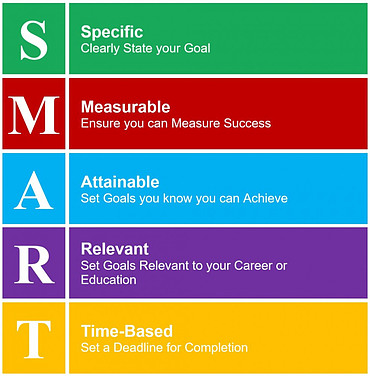
- Specific: Goals should be clear and unambiguous. Vague intentions like “I want to get in shape” lack direction. A specific goal defines exactly what needs to be accomplished, such as “I want to run a 5K.”
- Measurable: You must be able to track your progress. Measurable goals answer the questions of “how much” or “how many.” Establishing metrics—such as lifting a certain amount of weight or saving a specific dollar figure—provides a tangible way to know if you are on track.
- Attainable: While goals should stretch your capabilities, they must remain within the realm of possibility. Setting realistic goals based on your current resources, skills, and constraints prevents burnout and maintains morale.
- Relevant: Your goals should matter to you and align with your broader life objectives. If a goal does not contribute to your long-term vision, it may not be worth the expenditure of time and energy.
- Time-bound: Every goal requires a target date. A deadline creates a sense of urgency, separating an everyday goal from an open-ended wish.
By running objectives through the SMART filter, you eliminate ambiguity and construct a highly defined path forward.
Objectives and Key Results (OKRs)
While the SMART framework is highly effective for individual pursuits and personal development, larger entities often require more scalable techniques. Objectives and Key Results (OKRs) is a popular framework used by major technology companies and corporations to establish organizational and team alignment.
An OKR consists of two components:
- The Objective: This is the “what.” It is a significant, concrete, and action-oriented statement of what you want to achieve. Objectives should be inspirational and qualitative.
- The Key Results: These are the “how.” They are a set of 2 to 5 specific, measurable metrics that will indicate whether the objective has been met.
The power of OKRs lies in their transparency and their focus on aggressive, yet achievable, metrics. Typically, if an organization consistently achieves 100% of its OKRs, the goals were not set high enough. The system is designed to push teams to stretch their limits, fostering innovation and significant growth.
Micro-Goals and Habit Stacking

Often, the magnitude of a long-term goal can trigger procrastination or feelings of being overwhelmed. To combat this, individuals can employ micro-goals and habit stacking.
Micro-goals involve breaking down a massive, intimidating objective into the smallest possible actionable steps. For instance, instead of setting a goal to “write an entire book,” a writer might set a micro-goal to “write 200 words a day.” This strategy minimizes friction and builds momentum.
Habit stacking, a concept popularized by author James Clear, involves anchoring a new desired habit to an existing daily routine. By integrating your goal-related micro-tasks into established daily behaviors (such as stretching for five minutes immediately after brewing your morning coffee), you eliminate the need to rely entirely on willpower.
Implementation Intentions (The “If-Then” Strategy)
Even with a beautifully structured goal, unpredictable obstacles and distractions inevitably arise. Implementation intentions, formulated by psychologist Peter Gollwitzer, help individuals navigate these disruptions through the “If-Then” planning technique.
This technique requires you to proactively identify potential roadblocks and map out your response in advance. For example: “If I am tempted to order takeout after a long workday, then I will immediately eat the prepped meal I have in the refrigerator.” By pre-loading your decisions, you automate your responses to potential pitfalls, drastically increasing the likelihood that you will stay on track when your environment challenges your resolve.
Tracking and Accountability

Setting a goal is merely the starting point; sustained progress requires continuous tracking and accountability. Regularly monitoring your progress provides essential feedback, allowing you to identify what strategies are working and which ones require adjustment. This can be accomplished through digital productivity applications, bullet journals, or visual progress trackers.
Furthermore, external accountability is a powerful driver of success. Sharing your goals with a mentor, a trusted friend, or joining an accountability group increases your commitment to the objective. When you know someone else is aware of your commitments, the psychological drive to follow through is significantly amplified.
Conclusion
Ultimately, goal setting is not a one-size-fits-all endeavor. The effectiveness of a technique relies heavily on the individual’s personality, the nature of the objective, and the specific context of the situation. Whether you are using the SMART framework to establish personal milestones, implementing OKRs to drive corporate growth, or breaking daunting ambitions down into micro-goals, the underlying principle remains the same. By providing direction, igniting motivation, and offering a mechanism for course correction, proper goal-setting techniques empower individuals and organizations to reach their highest potential and turn their visions into reality.